How to Stay Organized in School – Keeping school work in check.

Sometimes it gets hard to juggle everything that school consists of, thus leading to disorganization. Now organization is a very large and important part of staying on top of everything, especially school. But do we know why exactly? Well organization for a student is important as it helps improve time management, reduce stress, meet deadlines, enhances focus and so much more.
Now I want to say being organized goes slightly beyond having arranged books or having a neat desk, because I can’t tell you how to do that knowing very well that my desk looks like an active war zone daily (though you should keep your desk and books arranged lol). Despite this I consider myself quite an organized person, so why is that. Well to be honest, being organized is always being prepared for whatever comes up e.g projects and deadlines, carrying out your activities in an orderly way and in a way you can consistently keep track of.
Being organized is looking at your work and knowing how everything is progressing and moving along. So that’s what I’m going to tell you about today, yeah this may only be MY definition of being organized is but hey after all you’re reading my blog so I think you want to know how I tackle organization right?
There are two areas I want to tell you about being organized in. Firstly is being organized in your school work e.g notes, homework, assignments etc. All these are a very major aspect of school so it’s important to keep them all in check. Under this I want to first focus on notes and how tackle note taking in a well-thought-out way. I will focus on physical notes compared to digital ones as I’ve never been a school that allow digital notes or note taking so all my notes are physical.
⋆.ೃ࿔🌸*:・⋆.˚
NOTE TAKING
1.Have a notebook 🀢🀣🀦🀤

Obviously if you are going to take notes you need a surface to do so, more often than not this surface is going to be a notebook. So, get yourself a cute and affordable notebook. Some alternatives to this is either getting folders of different colours and write notes and place them there or get a different note book for each subject or getting binder clips and making a make-shift notebook for each subject. This will be better so you don’t have to mix up different notes of different subjects into just one book. One book also works perfectly fine, you just need to find a way to differentiate subjects when you need to read on them or write extra notes. An idea I can suggest is get little coloured tabs of paper and assign a certain colour to a certain subject.
2. Have headings before notes 🀢🀣🀦🀤
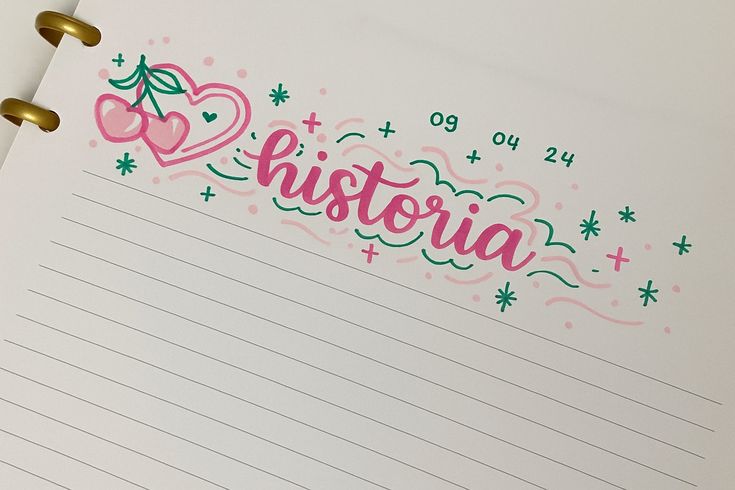
This is a very simple but efficient way to keep track of what you’re writing about. Also, when going back to read your notes its way easier to find a certain topic. You can differentiate headings from your notes by writing them in a different colour, doing calligraphy (truly optional) or using a different font from the rest of the notes, writing them in block or caps, doodling around them etc its truly up to you
3. Margin notes and annotating your notes 🀢🀣🀦🀤

These are short notes written at the margin of your pages. They help in showing ideas, summarizing the notes and pulling out key points. They are great for revision or when you’re skimming your notes, same for annotating your notes. When writing margin notes or annotating your notes, you use different colour pens as they act as an extension of your notes. Under this you could also try using the Cornell method of taking notes.
In the Cornell method of taking notes, you divide you page into three sections. One for the actual notes, one for short notes or margin notes, and one for summary. This method may or may not work for you but it couldn’t hurt to also try it.
4. Make key notes and points visible 🀢🀣🀦🀤
Key points and notes are actually the most important part of any text. Everything else just help explain more about them thus you need to make them more visible as they are more important. You can do this by writing them in different colours or highlighting them. If you want, you can get creative with how you make these nuggets of information bold and brighter compared to the rest of the text.
5. Do not focus too much on aesthetic notes 🀢🀣🀦🀤

I don’t think anyone truly understands how much I’d love to have those pretty notes you usually see if you were to watch most notetaking videos. They are so aesthetically pleasing and just so soothing to look at, but we need to understand we do not really have to strive to be that. Your notes don’t have to look like they are going to be the first result when you search aesthetic notes on Pinterest. As long as they are neat and legible, actually they don’t have to be that neat as long as you can read them and you can get what you need from them that truly is enough.
6. Making notes 🀢🀣🀦🀤
It is very important to actually know what to write while making your own notes. The main point of writing your own notes is to get a better understanding of the already given information and notes. Thus, while making notes, it is very important to only focus on key points and main ideas of the text.
They are a few ways to realize which points are they key points, one of the ways is reading though the text. The ideas and points that are centralized or most focused on are the main ideas and the rest of the text are just supporting sentences or help explain more about this said main idea.
Another good way of making good notes is basing your notes around the topic / learning objectives. Every strand, sub strand/sub topic and topic always have set learning objective. They are either stated by the teacher or found at the end or beginning of the topic in a textbook. By basing your notes around these it is very easy to only make notes on the important things which saves a lot of time and energy.
Another way to take good notes is by referring to multiple sources. Textbooks, peers, resource people, the internet etc. That way you would have covered all bases and have a bit of everything in your definitions and explanations.
7. Add, don’t redo 🀢🀣🀦🀤
Sometimes you may be reading something or your teacher is revising a certain topic and you get a better explanation of a certain statement or topic and you already have another definition in your notes. Your first instinct may be to write other new notes on the same topic and just call it revision (I know I would and I have done many times). Though this is actually not efficient and is just a big waste of time, why would any person in their right mind spend so much time re writing something they already have? Instead, you should add more onto what you already wrote. It is kind of the same as annotating your notes or use of margin notes. This way it is way easier to have all your ideas in one place. A tip I have is that if the new information exists on a textbook you have, you could just indicate the textbook page and that way you can just refer back to that page.
Now how about we move on to another thing? In the second part, I will help you organize your school life in general, cause what’s the point of having an organized note book when the order in your actual day to day school life is wanting?
⋆.ೃ࿔🌸*:・⋆.˚
(DISCLAIMER: I do not own any of the photos appearing on this post. Credits go to the rightful owners.)